Skip to content
Menu
All insights

Models4 min read

Gemini 4 Carbon: built for long engineering runs and root-cause fixes.

Google says Gemini 4 Carbon stayed on hard bugs for days in its internal runs, working through dead ends to a root cause and a patch. Vetted cyber defenders get it first through Fairwind; broader availability is coming soon.

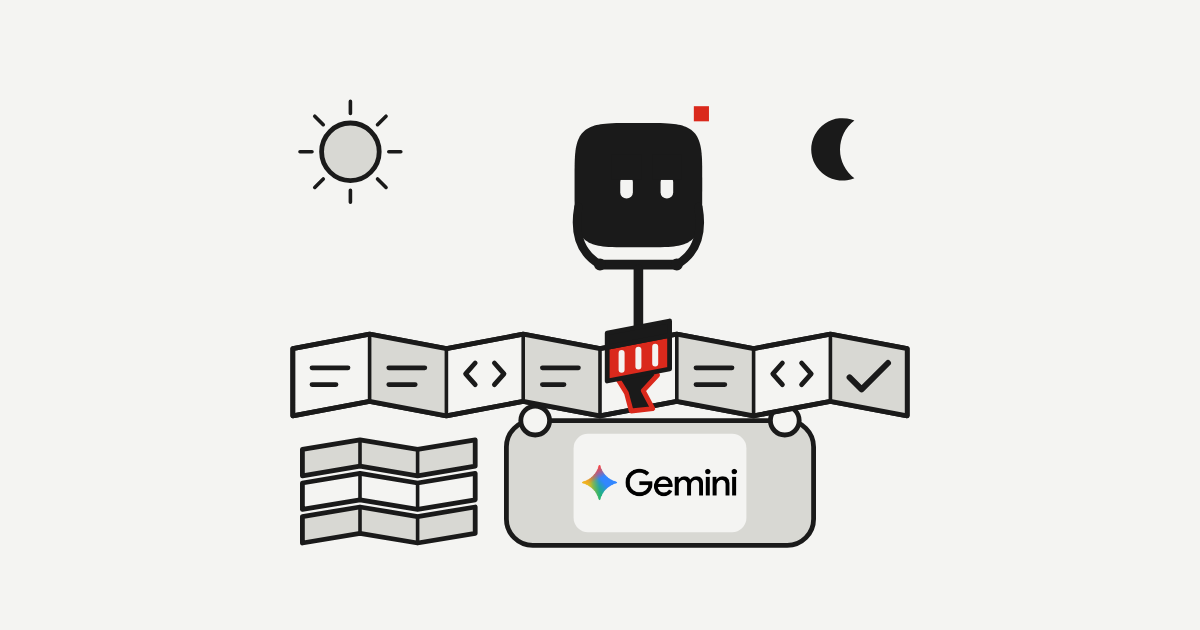
Prepare presses a stitched red patch onto a jagged break in one fold of a long concertina of code as it runs over a Gemini-labelled repair bench, while a sun and a crescent moon mark a long working stretch.

A model that stays with the problem

On October 28, 2026, Google announced Gemini 4 Carbon, its next frontier model and the successor to Gemini 4 Argon. The launch touches science, full-stack web development and multimodal understanding, but two themes sit at the center: sustained engineering work and cyberdefense. Put simply, Carbon is pitched as a model that stays on hard technical problems and helps defenders find and fix weaknesses in code.

Most of us know AI coding help in short bursts: write a function, explain an error, suggest a test. Real engineering is rarely that tidy. A bug in a large codebase can take a person days of reading, guessing, trying and backing out of wrong turns before the actual cause shows up.

That is the gap Google says Carbon is designed to close. In Google's internal observation, the model kept working for days on large-codebase tasks and low-level bugs, running into dead ends, recovering and continuing until it reached a root cause and a patch. That is Google's account of its own runs, not an independent measurement, but it shows what "sustained" means here: a longer stretch of useful work that remembers what has already been tried.

To picture why that matters, imagine a crash that only appears with one unusual input in a large service. A short-lived assistant might suggest a guard around the symptom. A patient agent can follow the input back through several layers, notice that an earlier length check is wrong and fix it there - the kind of change that closes a whole class of failures rather than one.

Find it, prove it, fix it

The cyberdefense results follow the same arc: detect a weakness, validate that it is real, then repair its root cause without breaking what already works. Google reports three headline numbers. All were measured with the model running without its usual guardrails, and all are benchmark success rates, not counts of real-world incidents prevented.

  • CWE-bench: 71.0%. The benchmark owner's own leaderboard lists Carbon at 71% across 120 held-out audit-and-patch tasks. Each task asks the model to find a flaw and patch it so the flaw is blocked while the project's existing tests still pass. That second condition makes it a good stand-in for real repair work.
  • SEC-bench Pro: 88.2%. Per Google's methodology, this is a 183-task May 2026 split focused on JavaScript engines, averaged over three independent attempts per task. It is Google's result on that split, not the public mixed leaderboard on the benchmark site.
  • ExploitGym: 54.8%. Google's own result with a 10-hour cap per task; under the default 6-hour cap it was 53.5%. It ran in a sandbox with no internet access and with system mitigations turned off, and success means demonstrating that the intended vulnerability is real. For defenders, that validation step matters: it separates a confirmed issue from a hunch.

Strong beyond security, too

Carbon's progress is not limited to security work. On the Artificial Analysis Intelligence Index, an independent composite of nine evaluations, the evaluator's model page ranks Carbon (high) first with a score of 59. That is a broad read on reasoning and coding rather than a win on every single test, and Google's own comparison table shows other models ahead on some rows.

Paired with long-task persistence, that makes Carbon worth watching for anyone building agents for complex software work, from large refactors and migrations to full-stack web projects.

Who gets it first, and what it costs

Access starts narrow, on purpose. Beginning the week of the announcement, Google is offering Carbon to a subset of cyber defenders through Fairwind, its managed access program for vetted partners, with more trusted partners added gradually. Google says availability for developers, businesses and consumers is coming soon. There is no public API yet and no general launch date.

Pricing is already announced. The introductory rate is USD 2 per million input tokens and USD 10 per million output tokens, with cached input priced 95% below the standard input rate. After the introductory period, pricing moves to USD 4 per million input tokens and USD 20 per million output tokens. Google has not said when the introductory period ends.

Why it matters

The interesting shift is from quick answers to patient work. A model that can keep a long engineering task in view, test its own ideas and land a fix at the root changes what teams can hand to an agent: not just "write this function", but "find out why this keeps breaking and propose a repair". Starting with defenders also makes sense - finding and fixing weaknesses is exactly the kind of slow, careful work where persistence pays off.

For most teams the useful step today is simple: watch for broader availability and pick the long, stubborn engineering task you would hand a patient agent first, with a person reviewing the patch it brings back.

9 sources. Each opens the original page.

Give a small team the reach of a large one

AI agents and intelligent software, connected to your business and supported after launch.